Oct. 13, 2026
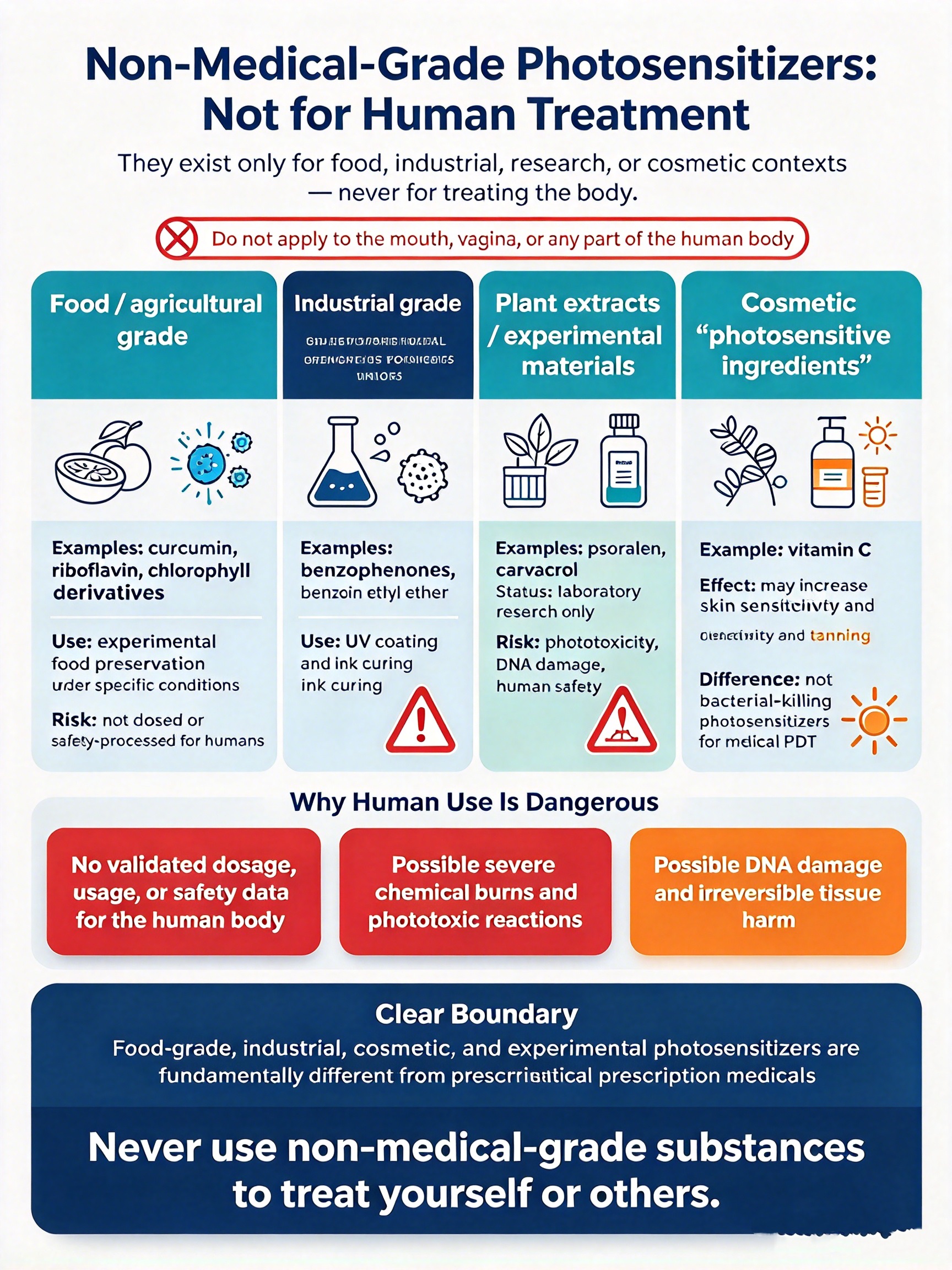
Yes, but only in non-medical scenarios such as the food industry or scientific research — they must absolutely never be used to treat the human body.
These non-medical-grade photosensitizers are mainly used in food preservation or in the field of industrial materials, which is fundamentally different from medical use.
l Food / agricultural-grade photosensitizers: e.g., curcumin, riboflavin (vitamin B2), and chlorophyll derivatives. Research has confirmed that, under specific conditions combined with blue light, they can effectively kill Escherichia coli and Staphylococcus aureus in food, and they are used for food preservation. But all of these are experimental studies — the dosage, purity, and exposure time are not designed for the human body.
l Industrial-grade photoinitiators: e.g., benzophenones and benzoin ethyl ether. These are industrial chemicals used for curing UV coatings and inks; they are toxic, and contact with the human body is strictly prohibited.
l Plant extracts / non-medicinal raw materials: e.g., psoralen and carvacrol. The former carries a strong risk of phototoxicity and DNA damage; the latter is still at the laboratory research stage.
In addition, "photosensitive ingredients" in cosmetics (such as vitamin C) mainly make your skin more light-sensitive and prone to tanning; they are not "photosensitizers" for killing bacteria — the two concepts are completely different.
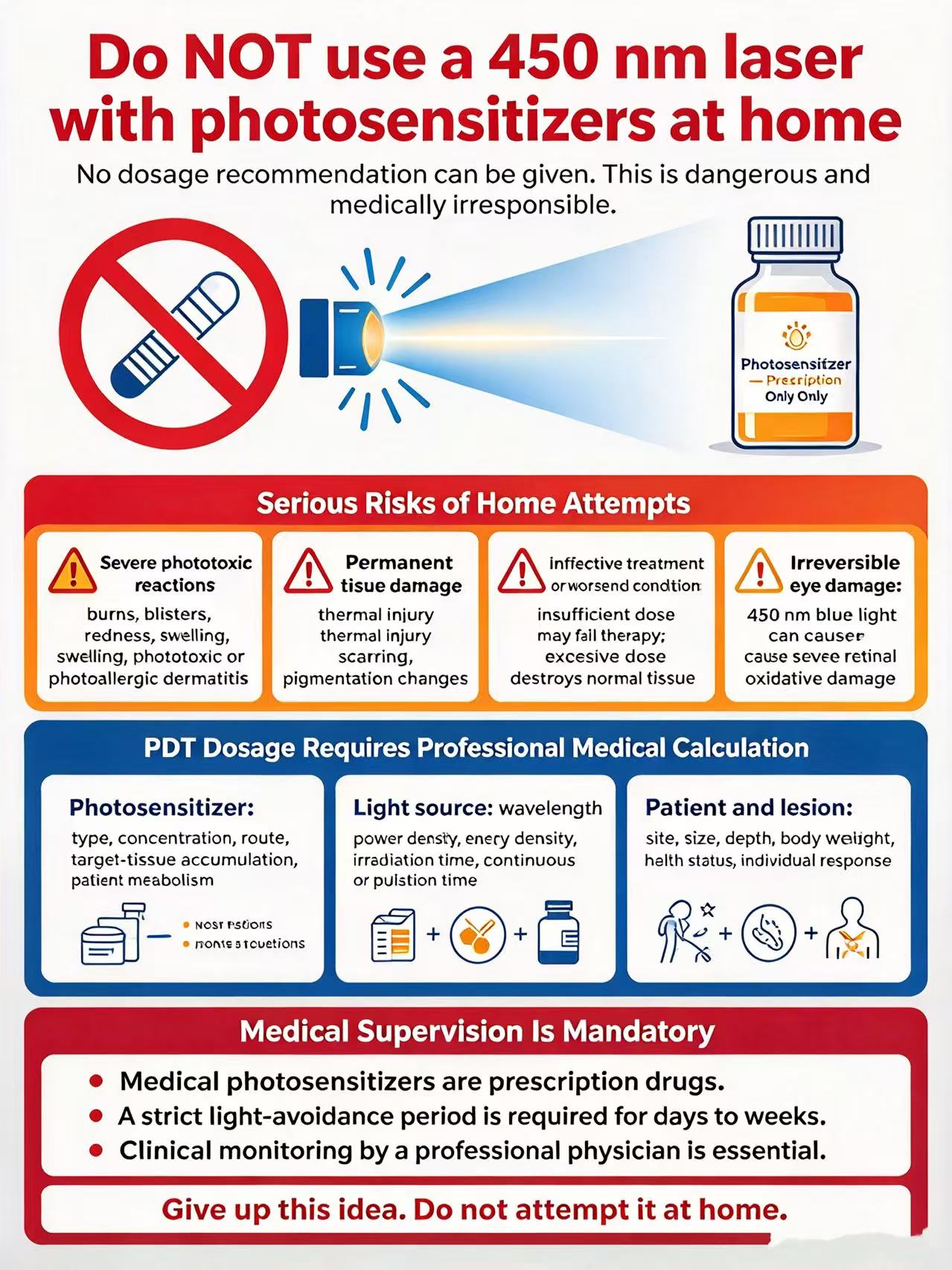
Please be well aware: these substances are not purified or safety-processed, and there are no dosage, usage, or safety data for the human body whatsoever. Applying non-medical-grade photosensitizers to the human body (including inside the mouth or vagina) is extremely dangerous and may cause severe chemical burns, phototoxic reactions, or even DNA damage.